Vienna was the heart of the Habsburg Empire for centuries, and it’s a city that takes both the magnificent and the morbid seriously. It is famous for its balls as much as for its elaborate “schöne Leich” (beautiful funerals). Mozart wrote music there; Freud developed psychoanalysis there. Both drew on the same city.
Alongside the palaces are the social housing projects of “Red Vienna,” built in the early 20th century, and architects like Otto Wagner pushing the city toward modernism. It’s a place that holds onto its past without being stuck in it.
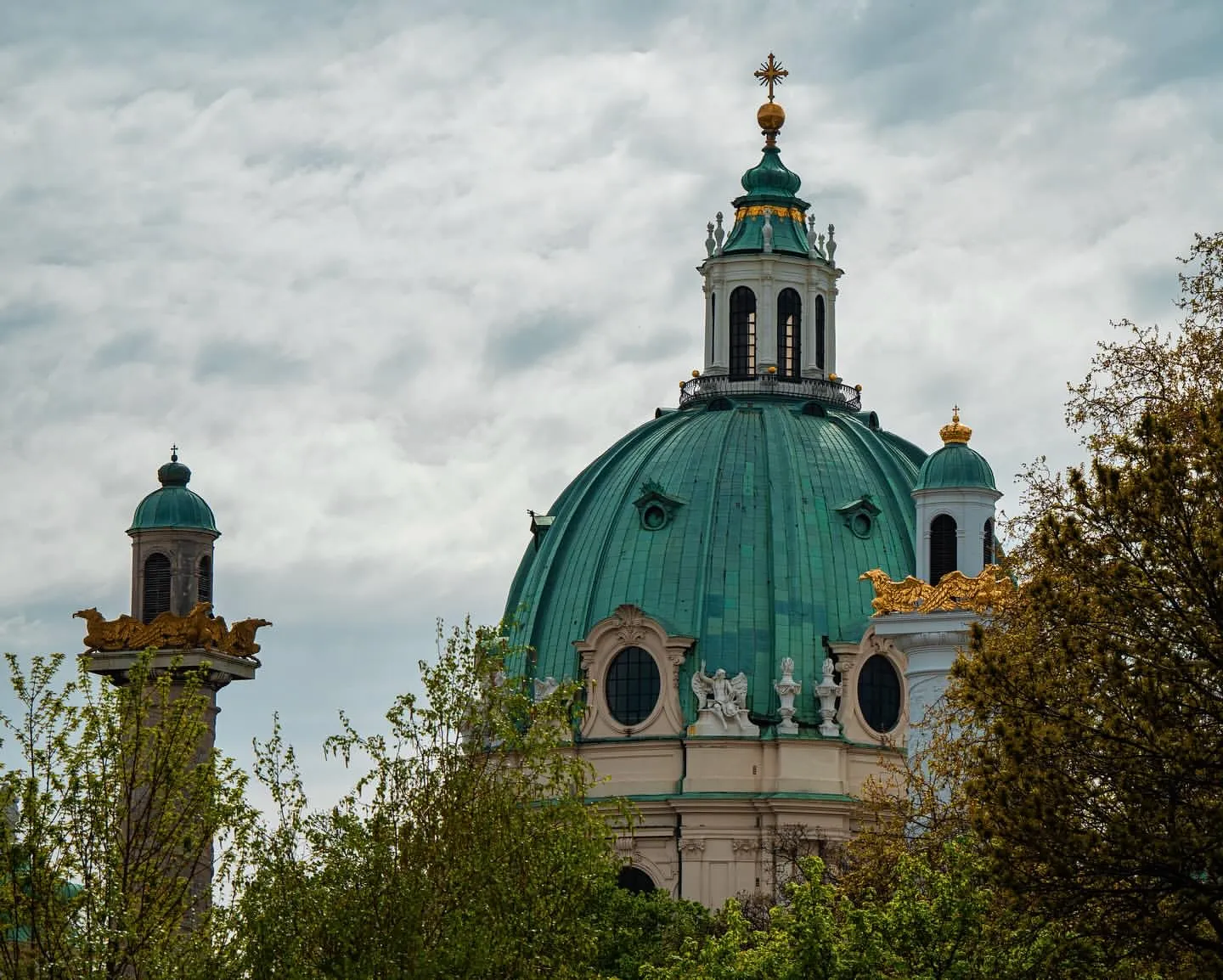
Vienna’s Karlskirche (St Charles Church), known for its turquoise dome, is a major example of late Baroque architecture. Emperor Charles VI vowed to build it during the 1713 plague, dedicating it to St. Charles Borromeo. Mostly designed by Johann Bernhard Fischer von Erlach and finished in 1737, it mixes styles: the dome, a classical portico, and two triumphal columns modelled on Roman ones, carved with spiral reliefs telling the story of the saint’s life.
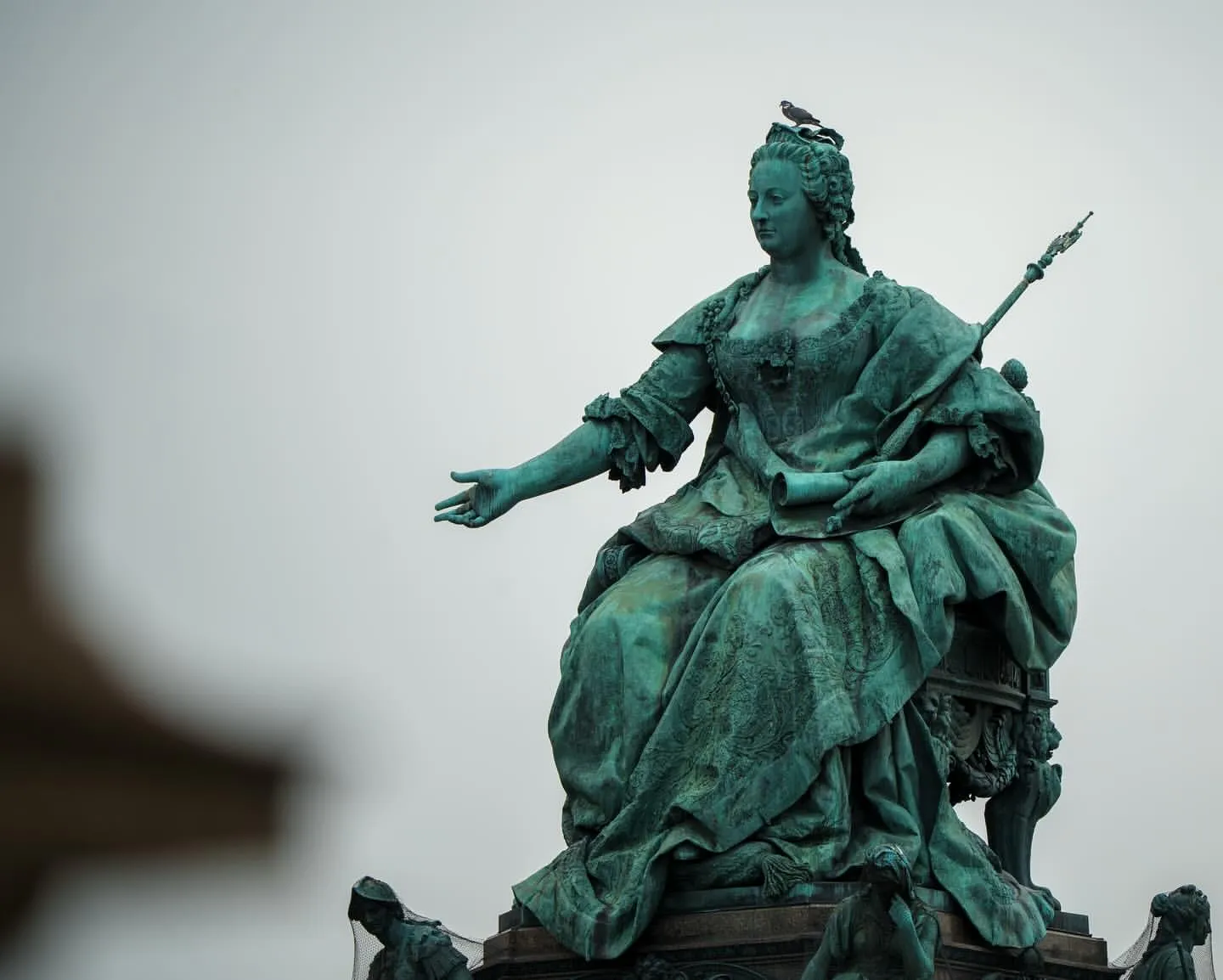
In Maria-Theresien-Platz stands the monument to Empress Maria Theresa (1717–1780), the only woman to rule the Habsburg lands in her own right, pictured here with an uninvited bird on her head. Unveiled in 1888, mostly the work of sculptor Kaspar von Zumbusch, the bronze shows her enthroned holding the Pragmatic Sanction that secured her succession, surrounded by statues of the military, political, and cultural figures from her reign.
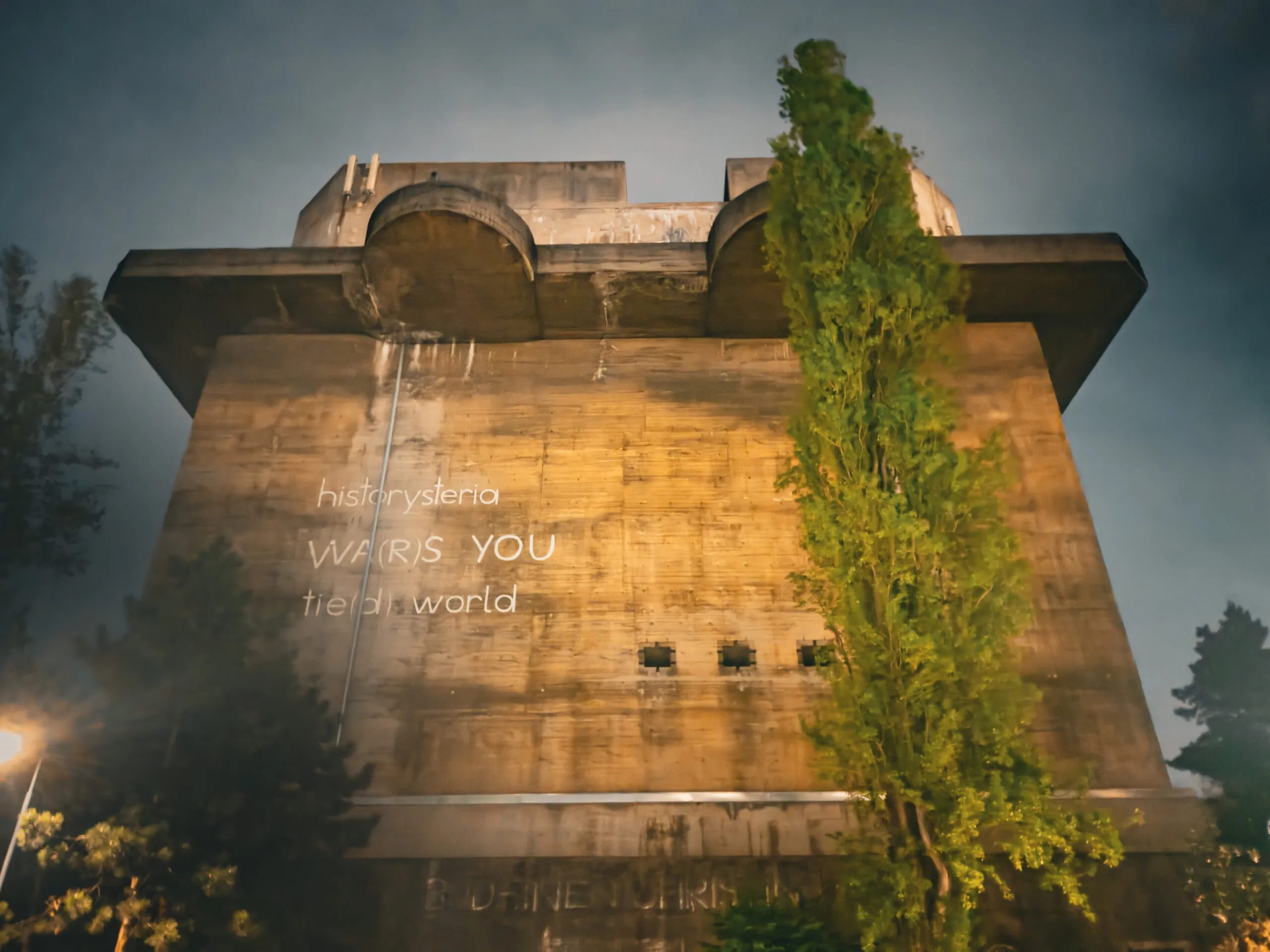
The first thing I did after landing in Vienna was go for a late-night run. About 3km in, I spotted something huge and dark up ahead and went to look. It turned out to be a massive, windowless concrete structure that looked completely out of place next to the old city. I had no idea what it was, so I just took a photo.
Turns out it was one of Vienna’s Flak towers. Nazi Germany built three pairs of these during WWII (six in total), each pair made up of a “G-Tower” (Gefechtsturm) for anti-aircraft guns and an “L-Tower” (Leitturm) for command and radar, both able to shelter thousands of people from air raids. They were built to be almost impossible to demolish, and mostly still stand today. They are too costly to take down, so some now carry graffiti or get used as art spaces instead.
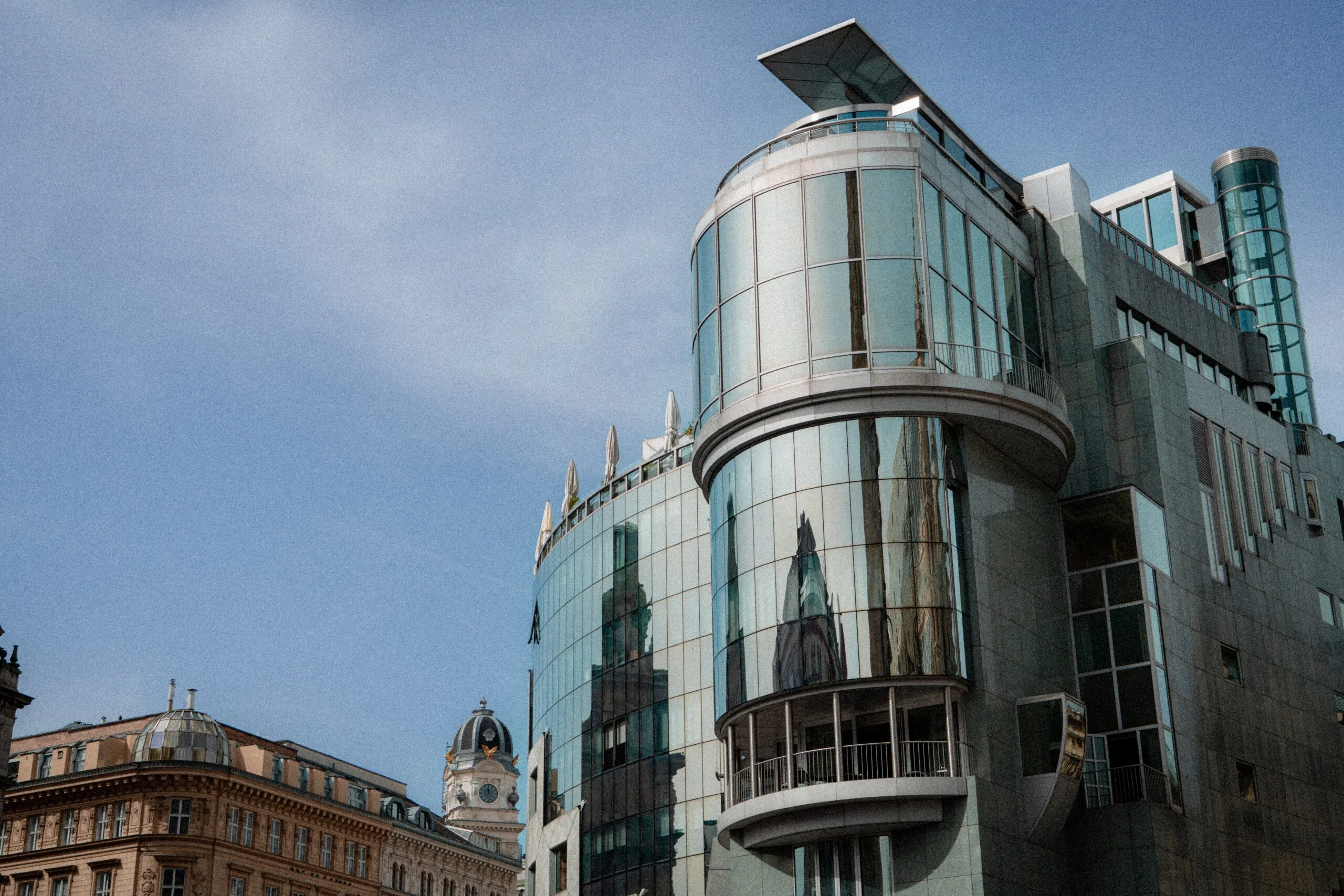
The Haas Haus, with its curved glass front, sits in deliberate contrast to St. Stephen’s Cathedral next door, and you can see the cathedral’s spire reflected in the facade here. Architect Hans Hollein’s postmodern design was finished in 1990 on the historic Stephansplatz and caused a lot of debate at the time, but the reflections do tie it back to its surroundings rather than just ignoring them.
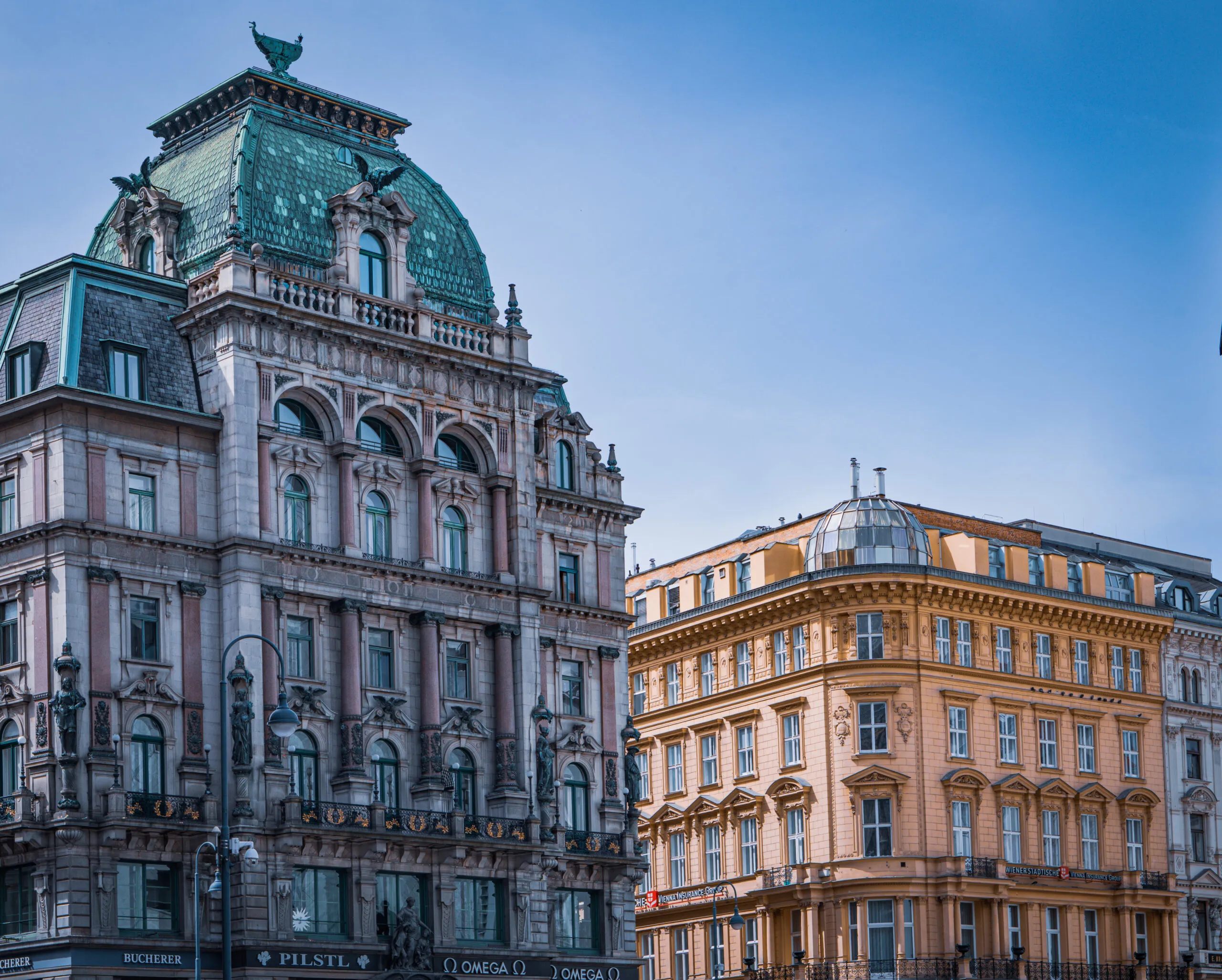
The Palais Equitable, on the left here, was my favourite building to photograph in Vienna. Completed in 1891 at Stock-im-Eisen-Platz as the local headquarters for The Equitable Life Assurance Society, it has an elaborate facade and a green copper roof. At street level, on the corner, it’s also home to the “Stock im Eisen”, a medieval tree trunk studded with nails, which is where the square gets its name.
The trip itself was thrown together over the phone at short notice, and it turned into one of my favourite cities I’ve been to. It started on a low note (Bayern Munich lost to Inter Milan the night we arrived), but the city, and good company from my Opa, made up for it fast.