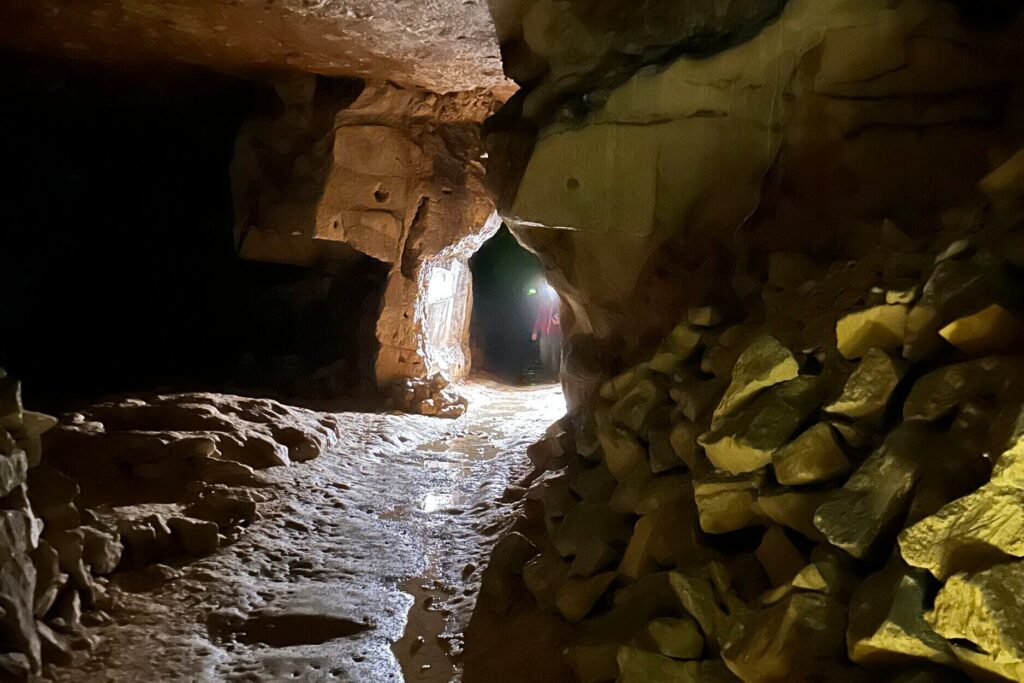
History
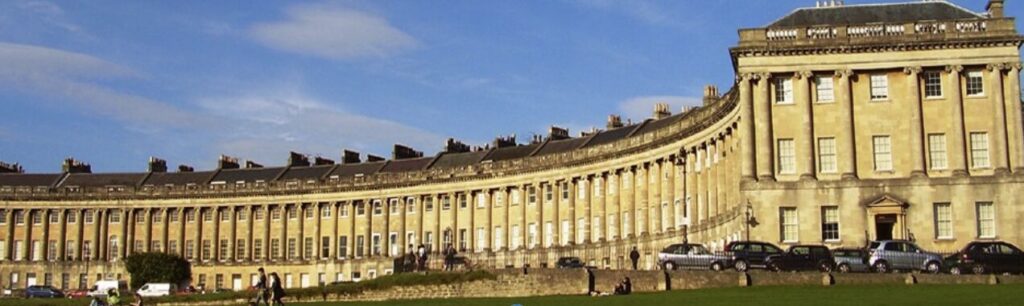
Browne’s Folly Mine, near Bathford in Somerset, is a leftover of the region’s quarrying history. It was part of a network of mines extracting Bath stone — a creamy, oolitic limestone prized in the 18th and 19th centuries for how easy it was to work and how it looked. This stone built most of Bath’s Georgian architecture, giving the city the golden colour that helped it become a World Heritage City — the Royal Crescent and the Circus were both built with stone from quarries like this one.
At the peak of quarrying in the 19th century, workers cut a maze of tunnels into the hillsides, supplying stone across the country. The 20th century brought cheaper materials like concrete and brick, and demand dropped — Browne’s Folly, like most of the region’s quarries, was eventually abandoned. Nature has slowly reclaimed it since, and the mine is now home to endangered species like the greater horseshoe bat.
That wasn’t quite the end of it, though. During the Second World War, the mine was repurposed like several other Somerset quarries (including the better-known Spring Quarry) — the underground space made a safe spot for the Ministry of Defence to store ammunition and other military supplies, out of reach of German bombers and protected under metres of Bath stone.
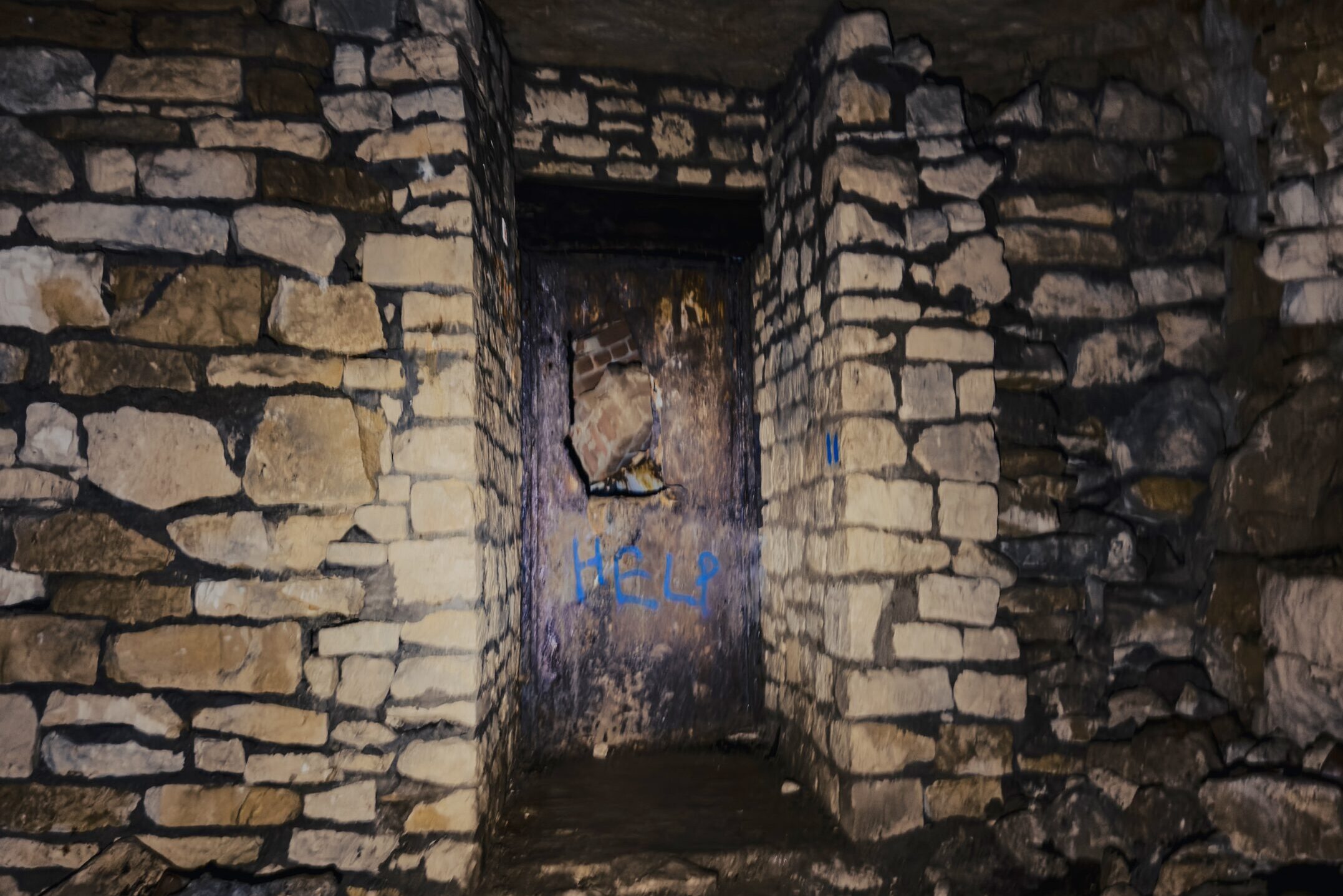
The infamous red door, on the other side lays the natural archives
After the war, part of the nearby Monkton Farleigh mine was used to store records for the National Archives — its stable temperature and humidity made it well suited for preserving documents.
The site is now classified as a Site of Special Scientific Interest (SSSI), because of the horseshoe bats living in the mines.
I went in with a couple of friends to explore the system, which I’d been down a few times before. The photos are limited in quality because of the poor lighting and because I only had my phone on me — bringing expensive camera gear into a dusty, wet, tight space didn’t seem like a great idea.
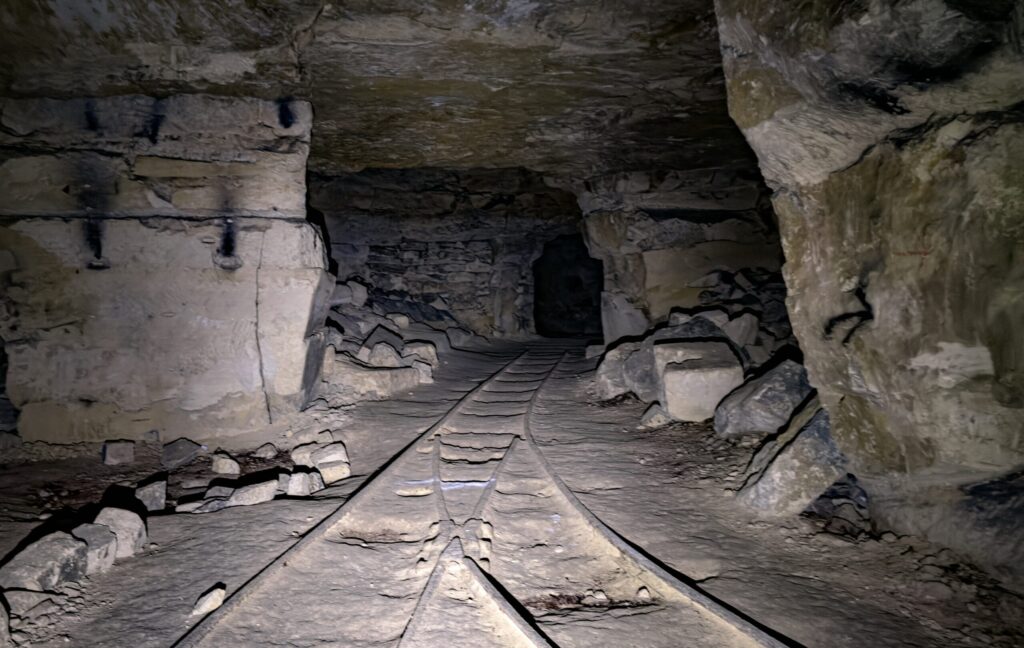
These tracks were part of the quarry’s narrow-gauge railway, laid through the tunnels to move minecarts loaded with cut stone and waste rock. They made hauling multi-tonne loads far easier than doing it by hand, and carried material from the working face out to the surface.
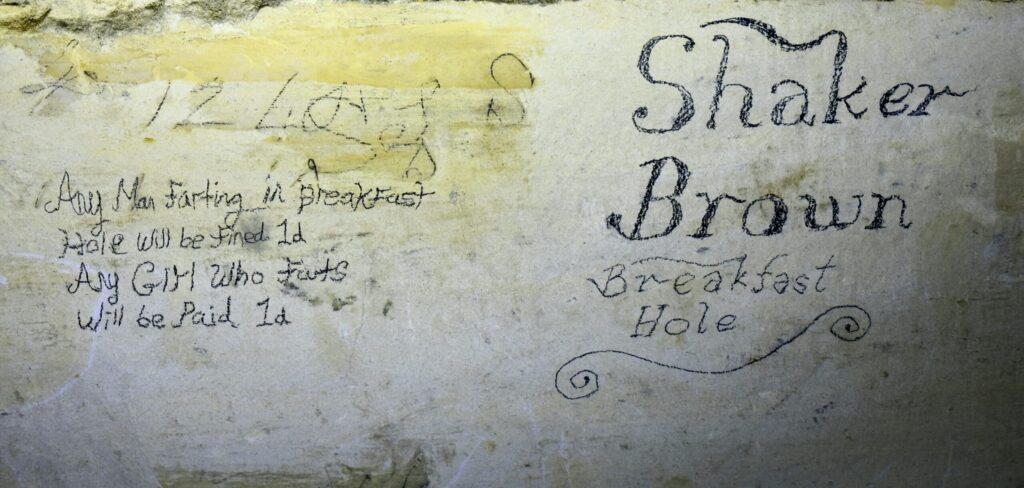
Original miner graffiti, likely from the 19th or early 20th century. Miners often used graffiti to vent frustration at the mine’s owners or the government, which explains the profanity in the poem. There’s also a contrast in how it treats the “man” versus the “girl” — suggesting the miners saw girls as having it easier, since they wouldn’t be expected to work the mine for a wage of “1d”.
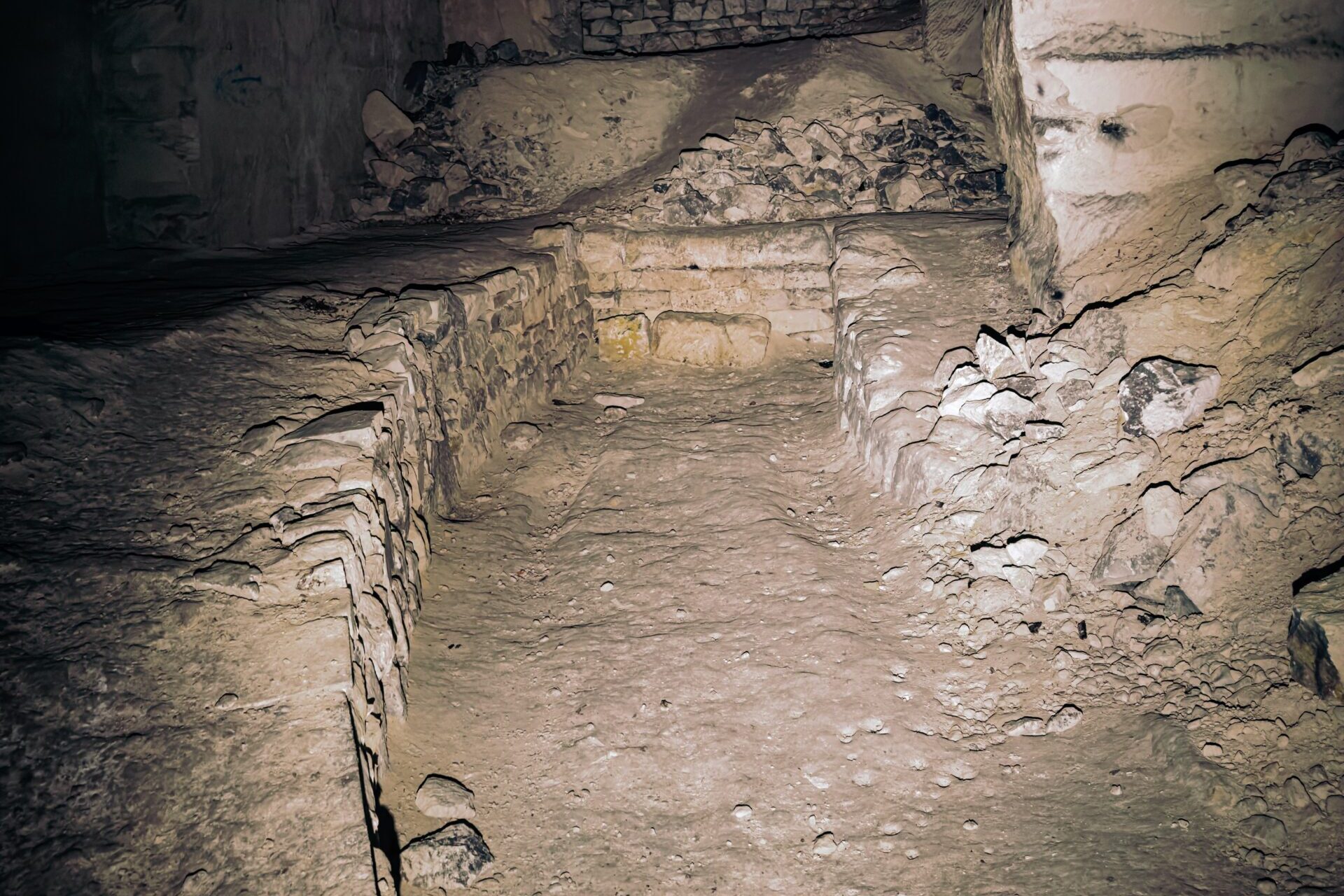
This looks like a loading bay — a point where quarried stone, freshly cut from the working faces, was gathered and loaded onto the minecarts on the main haulage tracks, often moved there by hand or on smaller trolleys first. Now it’s just a quiet alcove.
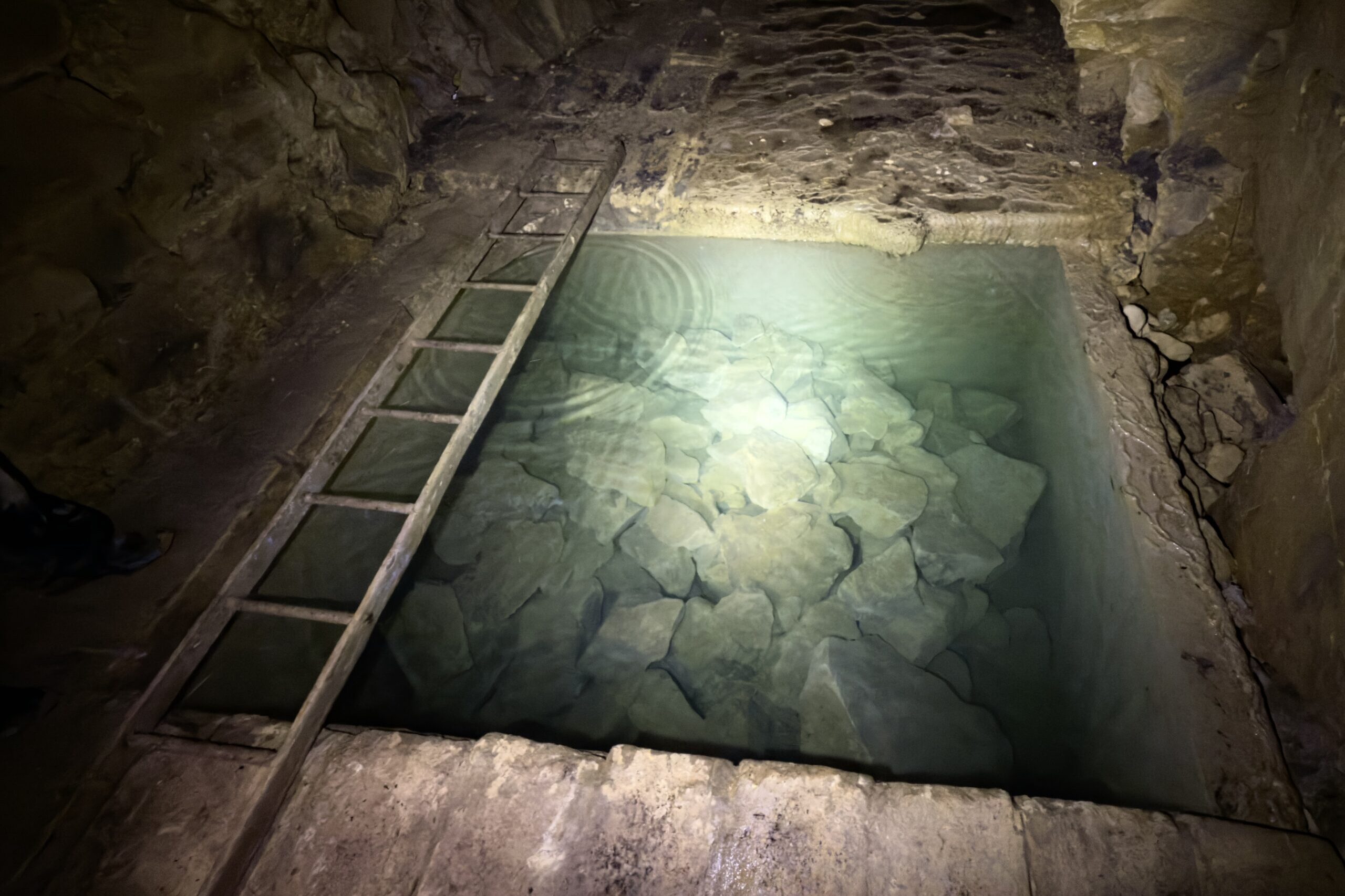
A well or sump like this would have handled drainage — managing the groundwater and rainwater that constantly seeps into anything built below the water line. Water collected here would be pumped out with horse-powered or (for bigger operations) steam pumps, to keep the working areas clear. The water was also useful for damping down limestone dust or for stone-cutting work.
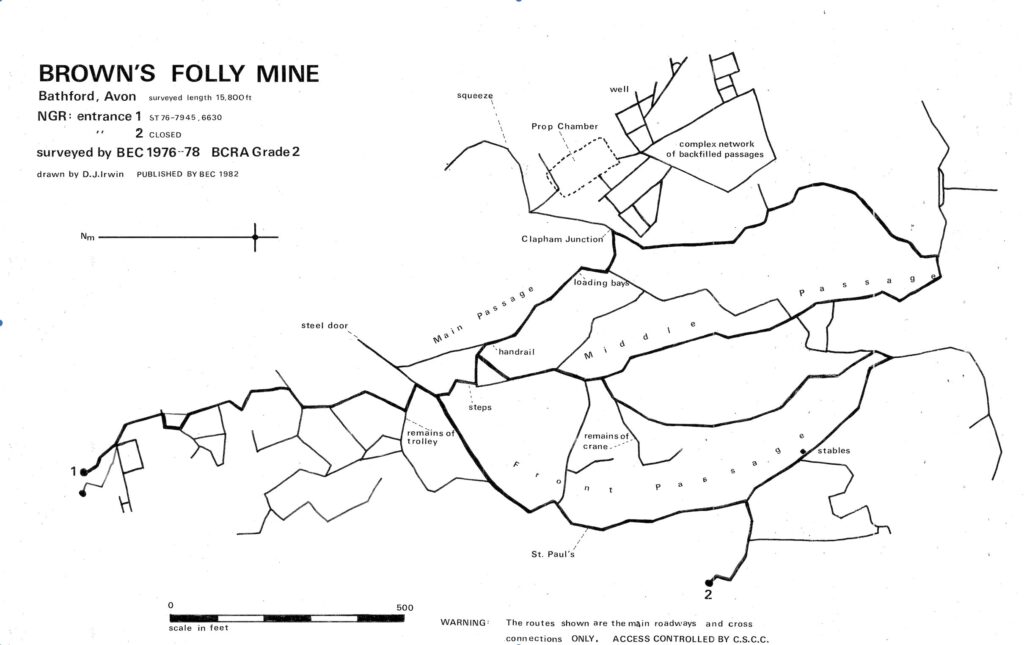
A slightly outdated survey of the system, showing the extent of the network. There are more detailed and more recent surveys available distributed by the Shepton Mallet Caving Club, it is not recommended to go into the system using this survey as a source of navigation.
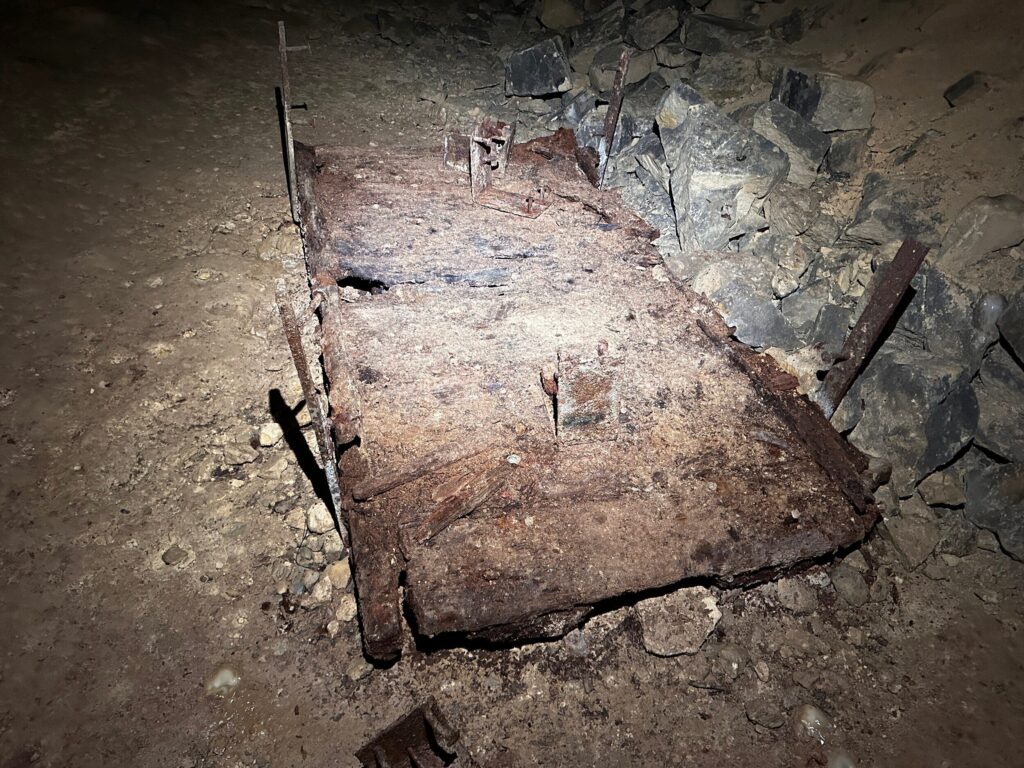
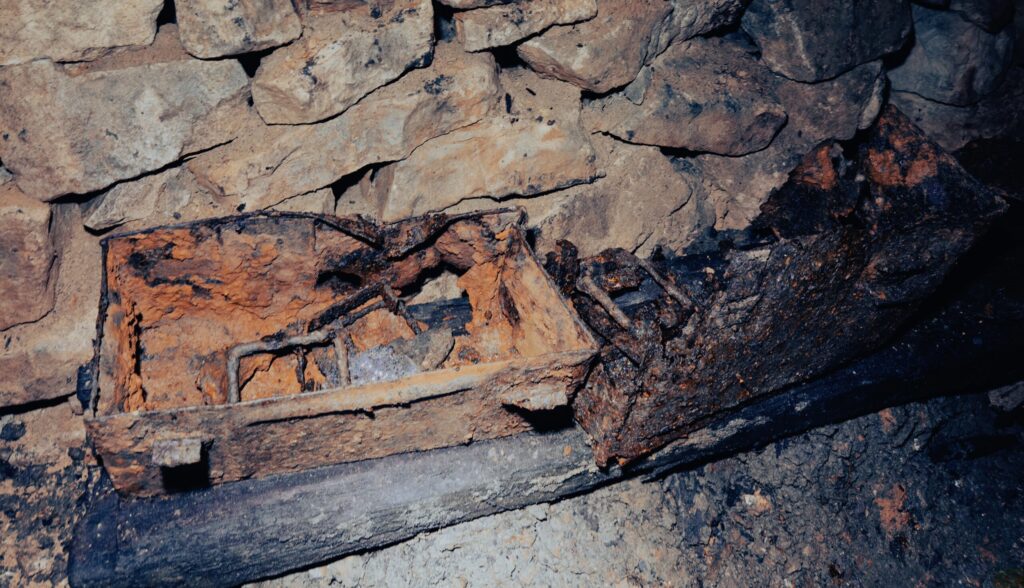
A decayed minecart in one of the passages. These were the workhorses of the mine — simple but essential for moving stone, waste rock, and tools and timber through the tunnels. Seeing one rusted away like this is a decent reminder of how much manual effort went into running a place like this.
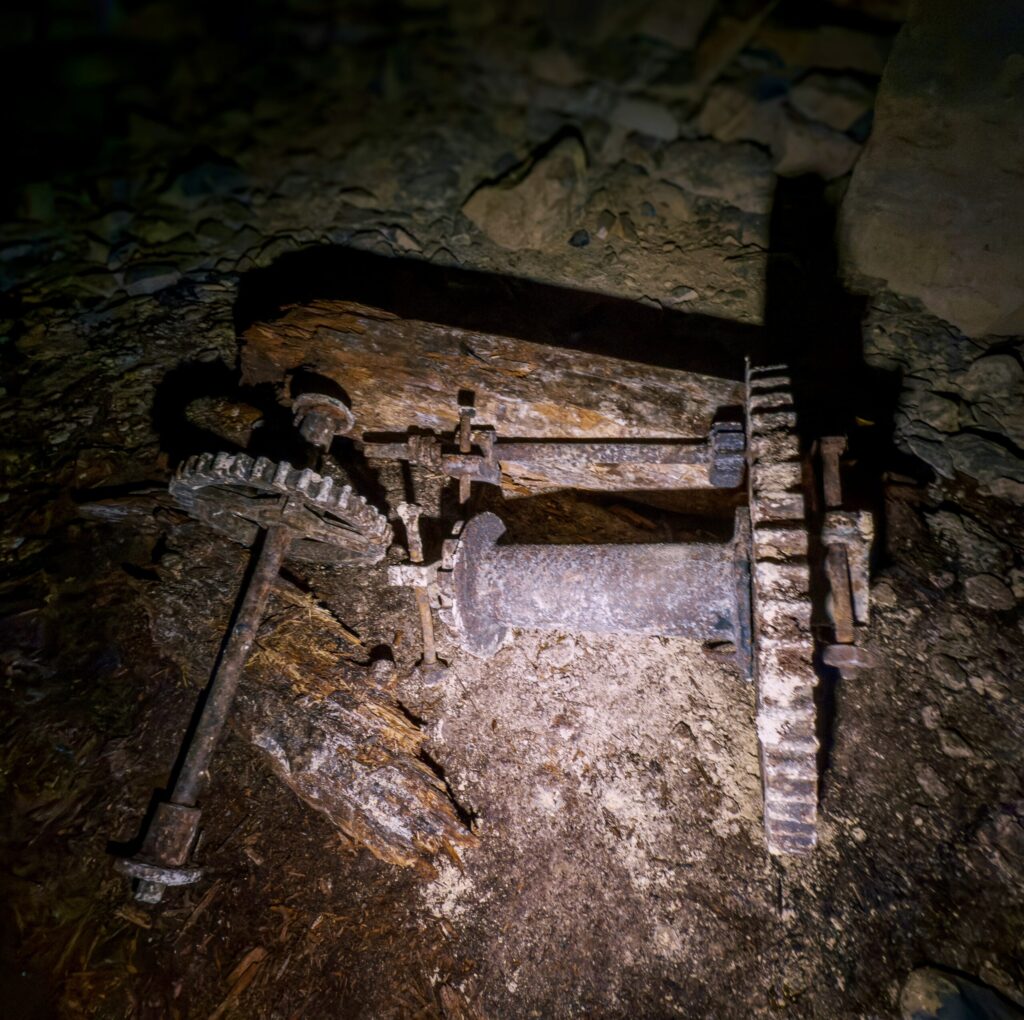
Not obvious at first glance, but this is the remains of a geared winch mechanism from a hand derrick — the lifting component workers cranked by hand to hoist heavy blocks of stone. The gears gave the mechanical advantage needed to move stone that would otherwise be far too heavy to lift directly.
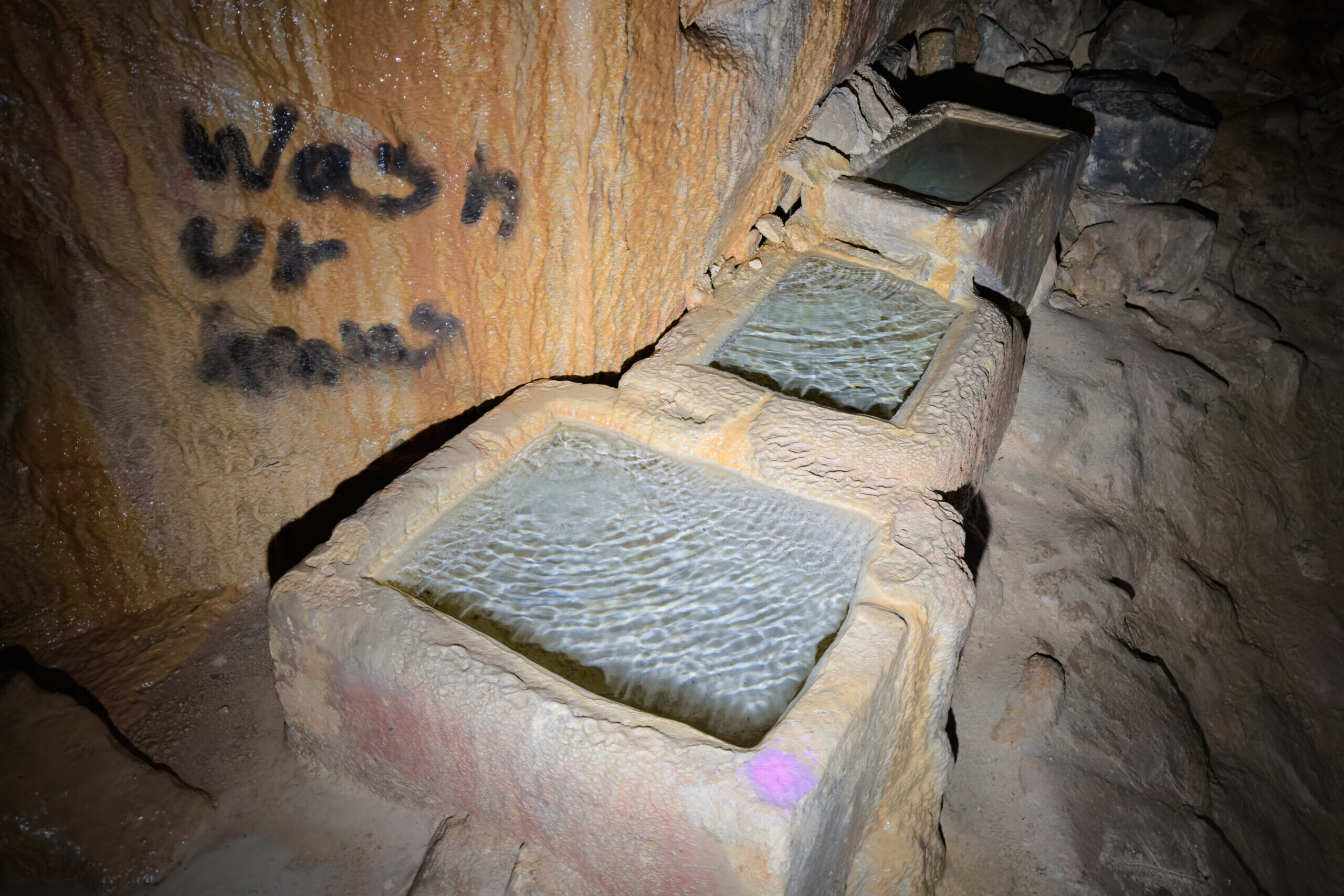
These stone basins were horse troughs — the horses and ponies used to haul stone through the tunnels needed watering too, and these were placed along the haulage ways or near the underground stables for that. A reminder that most of the heavy lifting here was done by animals, not machines.
Conclusion
Browne’s Folly has been through a lot — from quarrying the Bath stone that built the city, to storing military supplies in the war, to becoming a protected nature reserve. What’s left underground — the tracks, the graffiti, the machinery — is a fairly direct link to the people (and horses) who worked there. Above ground, you’d barely know any of it was there.